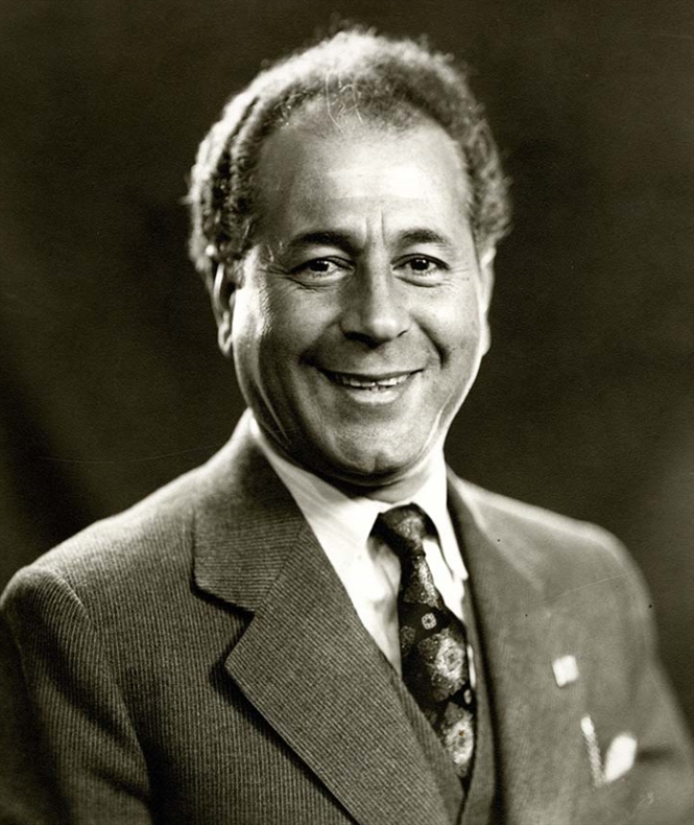
Saadeh built his Party based on the unity of the Fertile Crescent, or “Suraqia.” Palestinians, Jordanians, Syrians, and Lebanese joined the Party, representing all sects, communities, and ethnic groups—Kurds, Armenians, Circassians, Christians, and Muslims—without distinction. They felt a sense of closeness through their shared belief in a single cause: the liberation of the land and the renaissance of this nation. Saadeh asserted that Greater Syria possessed all the components necessary for development, but needed to become the master of its decisions and break the chains of bondage.
He wished to visit Iraq after 1947 and his second return to the region, but his time had run out. Those who feared their demise because of his ambitious project conspired against him , and he was assassinated on July 8, 1949.
When Saadeh returned to Lebanon from Brazil in 1930, he found his country fragmented and occupied by the British and the French. His first mission was its liberation, but he soon realized that it was impossible to liberate one entity of “Suraqia” without liberating the others. Thus, he founded his Party as a unifying organization for all the artificial states founded by Sykes and Picot at the end of the First World War in 1918.
The party was tasked with restoring cohesion—meaning that branches needed to be established everywhere in order to carry out the mission of liberation.
The magnitude of this undertaking did not deter Saadeh, nor did he pay heed to the warnings he received from certain intellectuals who insisted that it was impossible to create a party uniting all the sects and ethnicities of the Fertile Crescent—especially since he himself was a Christian belonging to the Greek Orthodox community. He accepted the challenge and triumphed. Thousands of enthusiastic young men and women joined his Party from all corners of “Suraqia,” with no difference made between Muslim and Christian, Arab or Kurd. For these youths were convinced of the soundness of his national project, which placed everyone on an equal footing—religious fanaticism dissolved, giving way to national and social loyalty. This conviction remained among nationalists despite internal divisions or withdrawals from the Party. Not one deviated from his/her belief in restoring the unity of the Fertile Crescent area,
nor did he/she place sectarian or ethnic allegiance above their national identity. This is one of the results of Saadeh’s tireless work, as he travelled across “Suraqia” to talk to the young in particular, for he wanted them to form the backbone of his movement, as he needed their strength and resolve for the struggles looming ahead.
Unfortunately, he did not receive any material backing for his endeavours.
The Party was founded in secrecy because the French authorities prohibited freedom of expression and assembly, and because Saadeh was certain that he and his movement would be persecuted the moment their program became known. Despite all precautions, the Party was discovered, and the French authorities launched a pursuit of Saadeh, who was working to expel them from his homeland.
When he was offered a chance to teach the German language at the American University of Beirut, he saw it as an opportunity to spread his ideas among the students. The story of his contract with AUB is an interesting one: the university president at the time, Bayard Dodge, knew his father, Dr Khalil Saadeh, who had graduated as a physician from that same institution, originally named the Syrian Protestant College, since Beirut was part of Syria at the time. When Saadeh finished writing his two stories, "A Tragic Love Affair" and "The Feast of Our Lady of Saydnaya", he gifted copies to the AUB president and reminded him of his father. Dodge offered him a teaching position, but was also determined to keep an eye on the young professor—especially since Dr Khalil Saadeh had joined the student revolt when the university’s founder, Reverend Daniel Bliss, decided to change the language of instruction from Arabic to English. Their teacher, Van Dyck, sided with the students and continued teaching them in Arabic for as long as he could.
Saadeh began secretly promoting his Party among the students, discussing and explaining its principles. But Dodge quickly discovered the truth and informed the French authorities, who arrested Saadeh on the charge of founding a secret organization.
Saadeh found no rest between his arrival and his forced departure from the region in 1938 due to French pursuit. No sooner would he leave prison than he would be returned to it. Feeling that the French authorities intended to get rid of him and abolish the Party, he decided to leave and focus on the Syrians of Greater Syria in the diaspora.
